MEMX + BOX Options Combine; Two-Way Retail Buy/Sell Activity
Aug 12, 2026

MEMX + BOX Options Combine; Two-Way Retail Buy/Sell Activity
Highlights & Recent Developments
- MEMX’s combination with BOX significantly strengthens our customer offering in the fast-growing options market
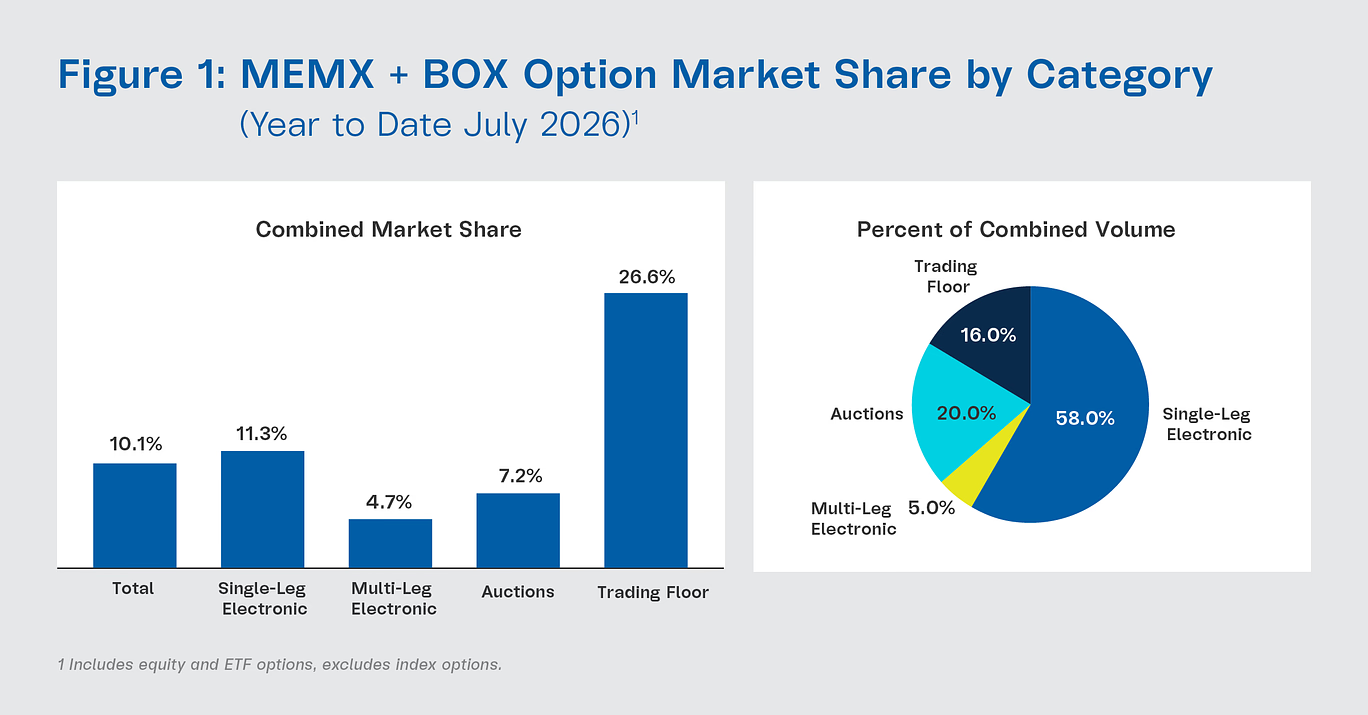
- The combined exchanges capture 10% total market share, including market share of 11% in single-leg electronic, 5% in multi-leg electronic, 7% in auctions, and 27% in floor trading
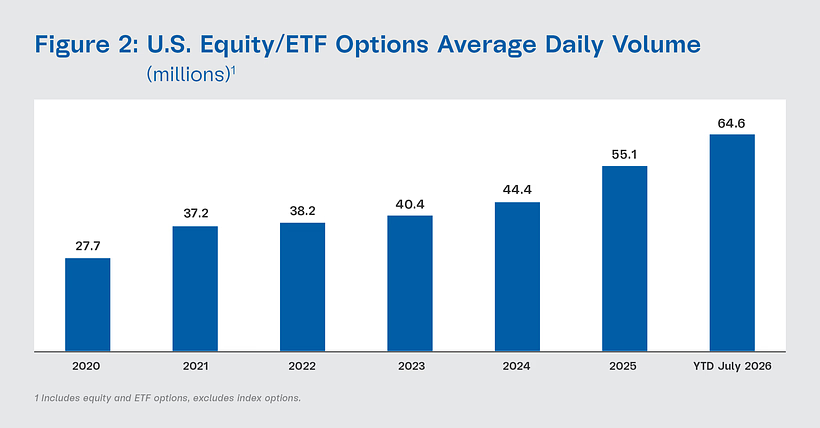
- Industry options growth remains exceptionally strong, accelerating to 64.6 million year to date through July 2026, up 17% from 55.1 million in 2025
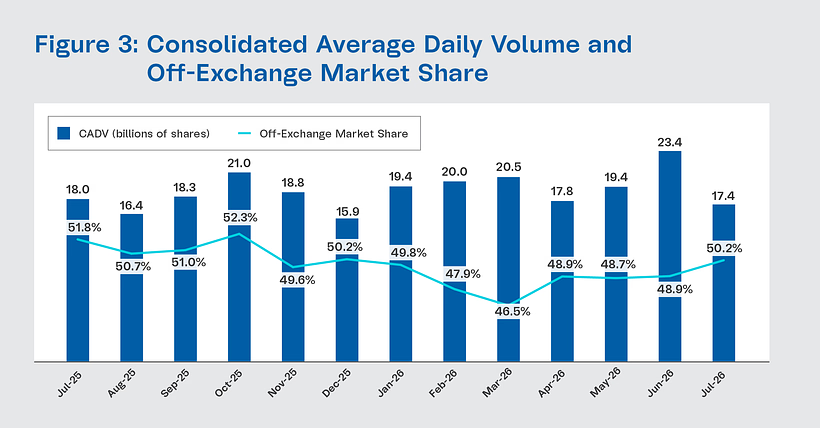
- Equity CADV fell 25% month over month in July after strong activity in June
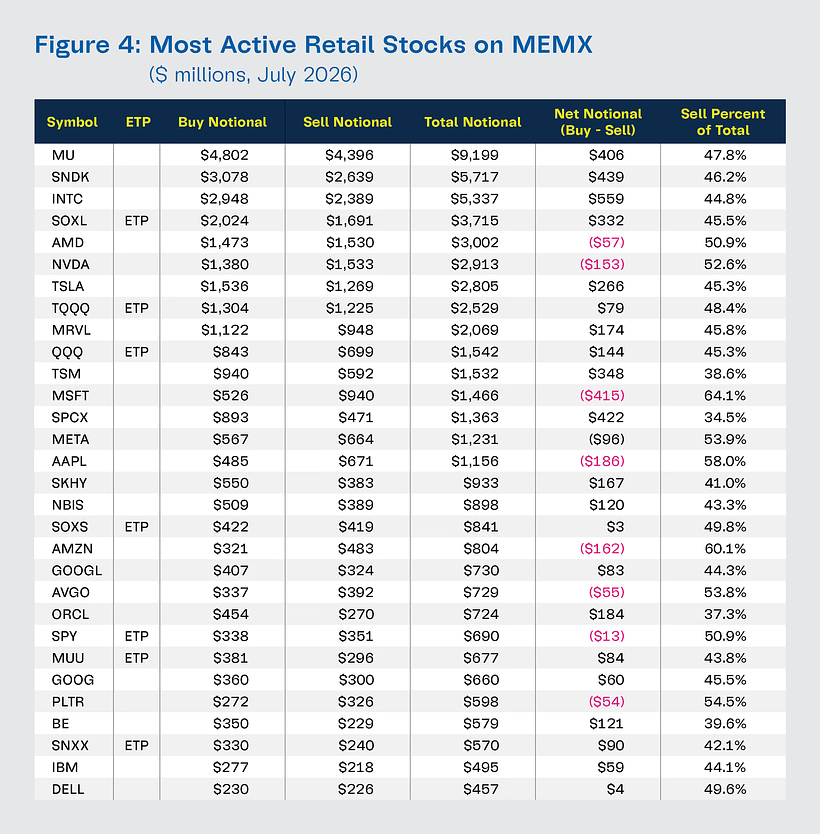
- MEMX retail trading was particularly active in semiconductor and memory stocks, which included a mix of buy and sell activity
- On average, over 47% of retail notional traded in the top 30 stocks was selling, as individuals took profits and rebalanced
- A SEC roundtable to discuss 24-hour trading is set for September 17
Options Exchange Highlights
On July 30, MEMX announced a strategic combination with the BOX Exchange, which will significantly enhance MEMX's capabilities and scale by bringing together two leaders in the U.S. listed options market. TMX Group will have an approximately 59% ownership interest in the combined business with investments from Chicago Trading Company, Citadel Securities, IMC, Interactive Brokers, Jane Street, Markets Infrastructure Partners (MIP), Morgan Stanley, Optiver, Schwab, Virtu Financial, and Wolverine. The transaction is expected to close in the second half of 2027, subject to regulatory approval.
This transaction significantly expands MEMX’s U.S. options footprint with a third exchange license, adding an electronic and open outcry floor trading platform to its existing price/time and upcoming customer-priority pro-rata matching engines. The combined company will offer a complete options trading toolkit, including continuous single-leg and multi-leg trading, price improvement auctions (PIP/COPIP), institutional block mechanisms (Facilitation, Solicitation, QCC), and customizable FLEX contracts.
Year to date through July 2026, the combined exchanges captured a 10% total market share, including market share of 11% in single-leg electronic (aka regular-electronic trading, which accounts for over 50% of industry volume), 5% in multi-leg electronic, 7% in auctions (single-leg and multi-leg) and 27% in trading floor. The ability to compete across all segments of this fast-growing market significantly strengthens MEMX’s customer offering.
Industry option volume dipped in July to 64.4 million traded (excluding indexes), down 8% month-over-month, though longer-term growth trends remain exceptionally strong through 2026. Reviewing options activity over the past six years, combined equity and ETF option average daily volume doubled from 27.7 million in 2020 to 55.1 million in 2025, with further acceleration to 64.6 million year to date through July 2026. This expansion has been driven by increased retail and institutional participation, commission-free trading, and robust single-stock activity alongside the anchor of SPY and QQQ. Combined with short-dated options and advanced electronic execution, these factors have permanently lifted daily turnover far above pre-2020 levels.
Equities Exchange Highlights
Consolidated average daily volume (shares) fell 25% month-over-month in July after strong activity in June, but was only down 3% year-over-year. Notional activity was up 31% year-over-year to $1 trillion, but down 20% month-over-month. The summer months tend to be seasonally slower. Off-exchange activity increased to over 50% during the month.
Looking at the 30 most active retail stocks on MEMX, the highest activity level was in semiconductor and memory stocks, which were down significantly during the month. South Korean memory-chip manufacturer SKHY ADR launched its direct U.S. listing on July 10th and showed up 16th on the active retail watchlist.
On average, over 47% of retail notional traded in the top stocks was selling. This highlights a healthy, liquid, two-way retail market where individuals were taking profits after the spring rally, cutting losses, rotating and rebalancing portfolios.
A SEC roundtable to discuss 24-hour trading is set for September 17 in preparation for expanded exchange overnight trading in December. Around-the-clock trading raises new demands for liquidity, market safeguards and resilient technology. Overnight trading typically has wider spreads and increased volatility. Protections like price bands and trading pauses will be needed to prevent extreme price swings during overnight hours. Expanded continuous trading requires higher operational reliability while minimizing downtime for maintenance and upgrades.